Geotechnical Instrumentation Cables Are a Powerful Asset
Geotechnical instrumentation cables are the quiet heroes that make harsh-environment monitoring possible, from mines and dams to glaciers and landfills. When the cable is designed well, engineers get reliable data for years; when it is not, projects face downtime, safety risks, and spiraling costs.
What Geotechnical Instrumentation Cables Do
Geotechnical and structural health monitoring depend on sensors installed in soil, rock, and concrete to track how the ground and structures behave over time. These instruments measure settlement, movement, pore water pressure, strain, and other key indicators that reveal whether a site is stable or trending toward failure. Cables act as the lifeline between those sensors and your data loggers or realtime monitoring systems, often across long distances and in locations that become inaccessible once construction progresses. When a cable fails, it is usually quiet and invisible at first, but the consequences show up later as missing data, bad decisions, and higher risk.
Quiet Heroes in Harsh Environments
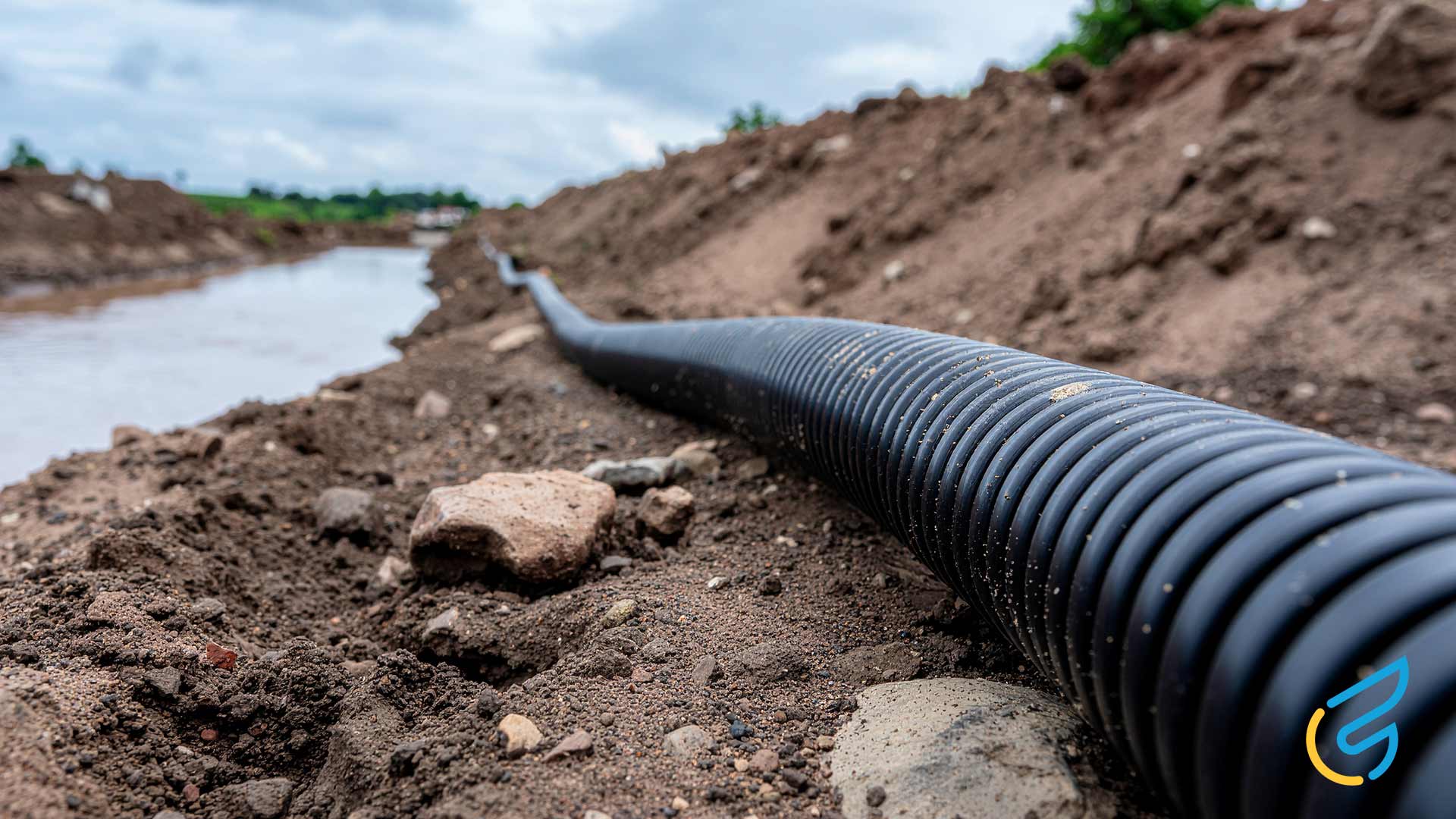
Unlike cables that live in clean, climate controlled facilities, geotechnical instrumentation cables spend their lives underground, underwater, or exposed on mountainsides. They are buried in backfill, pushed through conduits, dragged over rock, frozen into ice, and left to endure years of moisture, temperature swings, and chemical exposure. Off-the-shelf cable may work on day one, but it is rarely designed for this combination of mechanical abuse, water ingress, and long-term stability.
Quiet hero cables are purpose built for the environment. They keep performing even when:
- Groundwater, seepage, or full submersion is constant.
- Backhoes, compactors, and trucks introduce crushing and impact forces.
- Temperature cycles from deep freeze to heat stress repeat year after year.
- Aggressive soils, landfill leachate, or wastewater attack metals and plastics.
Instead of becoming the weak link, these cables silently protect signal integrity and uptime, allowing engineers to focus on interpreting the data—not chasing down failures.
Design Choices that Make a Heroic Differences
A geotechnical instrumentation cable becomes a quiet hero when every design choice is made with the field environment in mind. That means balancing electrical performance, mechanical robustness, and environmental protection rather than optimizing just one.
Key elements include:
- Conductors and gauge
Choosing the right copper size and number of conductors ensures sensors receive proper power, and signals travel long distances without excessive loss. Oversizing can make the cable bulky and hard to install, while undersizing risks voltage drop and fragile conductors.
- Insulation and jacket materials
Polymers must resist water, abrasion, cold, heat, and chemicals while staying flexible enough for handling and routing. The wrong jacket may crack in the cold or soften in heat, but the right one shrugs off seasons of abuse without drawing attention to itself.
- Shielding and noise control
Many geotechnical sensors, such as vibrating wire instruments, are sensitive to electrical noise. Shields, twisted pairs, and grounding schemes are selected to keep signal quality stable, even in electrically noisy or longrun installations.
- Mechanical structure
Fillers, strength members, and cabling geometries distribute tension and impact loads, allowing the conductors to stay protected. This structure lets the cable survive pulling, bending, and crushing during installation and for the life of the project.
- Application specific features
Armor, messengers, or colorcoded components may be added for extra protection, strain relief, or easier identification in complex monitoring systems.
When these features are tuned to your sensors, your site, and your monitoring goals, the cable quietly does its job for years, turning a potential point of failure into a point of confidence.
Case Study: High-Altitude Ice-Core Expedition
A high-altitude ice-core research expedition illustrates how custom cables support extreme conditions. Mercury Wire supplied cable for an Ohio State University–led project drilling ice cores on Mount Huascarán in the Peruvian Andes, where extreme cold, altitude, and terrain made reliability essential.
Drilling and sampling rigs operated in sub-freezing temperatures and thin air, where metals and plastics can become brittle—and standard cables often fail. Mercury Wire’s cable construction maintained mechanical strength and flexibility, allowing delicate ice cores to be pulled from deep boreholes without jarring or damage. When local protests forced the team to leave equipment and cables unattended on the mountain for several weeks, the cables remained functional, with no damage from weather, ice, or prolonged exposure.
Mercury Wire worked with Cryosphere, a partner providing light and medium drilling rigs for electro-drills and borehole logging used in glacial and geotechnical research, matching cable strength, length, diameter, and construction to each rig type.
Harsh Environment Design Demands
When designing for reliable and durable performance in harsh environments, there are requisite considerations for meeting the needs of the job. To match the parameters of the project and the exact environment, you must be intentional in specifying:
- The extrusion process
- Copper wire gauge
- Insulation and jacket materials
- Shielding
- Twisting and cabling
- Appropriate water-blocking level
When designed and installed, meeting all criteria—as was followed in the case study here—the cable became a true quiet hero of harsh-environment monitoring: unnoticed when everything worked, and absolutely critical to the mission’s success.

Turning Cable from Risk to Asset
When you treat cable as an afterthought, it often becomes your weakest link. When you treat it as a quiet hero, built for the realities of your site, it becomes a powerful asset.
Purpose engineered geotechnical instrumentation cables:
- Improve data reliability and continuity over the life of a project.
- Reduce unplanned site visits, troubleshooting, and replacement work.
- Protect the value of your sensors, data loggers, and analytical tools.
- Support safer decisions around construction, operations, and longterm asset management.
Solutions that Fit Your Sensors, Your Site, Your Long-Term Monitoring Goals
By working with a collaborative partner who understands both the science of materials and the realities of field installation, like Mercury Wire, you can design cables that disappear into the background of your project, because they are simply working.
Selecting or designing the right geotechnical instrumentation cable usually starts with defining what “harsh” means for a specific site across mechanical, ingress, climatic/chemical, and electromagnetic factors. Mercury Wire can then translate field realities into engineered constructions that support reliable monitoring.
Mercury Wire’s typical process includes application review, design recommendations for conductors, pairing, shielding, water blocking, and jacketing, prototype production for lab or field evaluation, feedback-driven refinement, and scaled production with inventory and delivery strategies aligned to project schedules.
In addition to bulk cable, Mercury Wire can supply pre-terminated assemblies, overmolded or protected terminations, labeling, and kitted lengths matched to junction boxes, sensors, and installation sequencing. This turns the cable from a potential point of failure into an enabling technology, so engineers can trust their data and focus on critical decisions in infrastructure, mining, energy, water management, and environmental projects.
Mercury Wire partners with you to engineer a solution that fits your sensors, your site, and your long-term monitoring goals. Contact us today to learn more about custom geotechnical instrumentation cables, explore our FAQ page for technical insights, or request a quote to fast-track your next project.