
Custom Cable Manufacturing
Key Takeaways
- Mercury Wire specializes in custom cable manufacturing, offering tailored solutions to meet specific industry needs.
- The company provides custom engineering and prototyping services to ensure that each cable design meets precise specifications.
- Mercury Wire's capabilities include extrusion, twisting, and cabling, allowing for complex cable constructions.
- Their custom cables are used in diverse markets such as medical, military, and aerospace, highlighting their versatility and reliability.
- Mercury Wire emphasizes delivery and inventory flow to ensure timely and efficient distribution of their custom cable products.
- The company offers additional services like shielding and water blocking to enhance cable durability and performance.
Most cable manufacturers will build what you ask for. We build what you need and make sure it performs the first time, every time, under the exact conditions your application demands.
If you’ve ever had a cable that looked right on paper and failed in the field, you already know why that matters.
Mercury Wire has been engineering custom wire, cable, and assembly solutions in Spencer, MA since 1967. Every cable we manufacture is designed around a specific application, environment, and end-use requirement. Nothing we build is off the shelf. Nothing we build is a compromise.
If you’re a design engineer or R&D lead who needs more than a quote. Speak with one of our engineers to get started.
What Is Custom Cable Manufacturing?
Custom cable manufacturing is the process of engineering a wire or cable solution to a specific set of application requirements, not sourcing a standard product from a catalog and adapting your design around it. At Mercury Wire, this means designing every construction detail, from conductor sizing and insulation to shielding and final assembly, around the real-world environment the cable will live in.
For most OEMs and system integrators, the cable is not a commodity. It carries signal, transmits power, survives harsh environments, and must perform reliably for the life of the product it’s built into. When standard cables fall short on temperature range, chemical exposure, mechanical stress, EMI sensitivity, or form factor constraints, engineered cable is the only real answer.
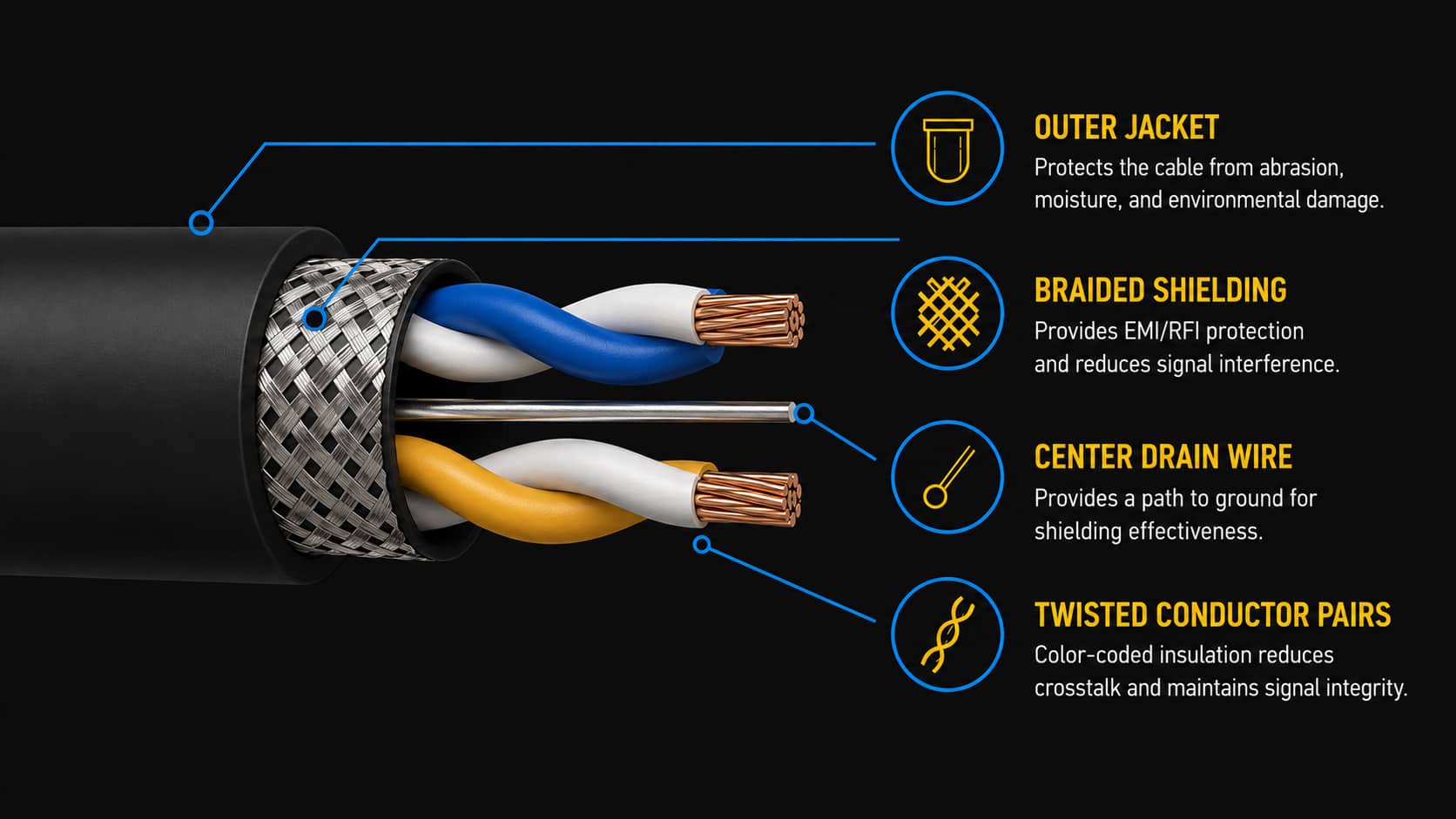
At Mercury Wire, custom cable manufacturing includes every layer of the cable construction process: conductor sizing and stranding, insulation and jacketing material selection, shielding type and coverage, twisting geometry, water blocking method, and the final assembly and testing that confirms your cable is ready for production.
The result is not a one-off special order. It becomes your standard supply item: consistent quality, predictable lead times, and reliable availability whenever your production schedule demands it.
Get a Fresh Set of Eyes on Your Cable Spec
If your cable spec was written once and never revisited, there is a good chance something is worth changing. Materials evolve. Applications shift. A construction that worked at prototype scale may not be optimal at production volume, and most suppliers will just keep building what they are asked for.
We review existing cable designs at no cost. We look for performance improvements, cost reductions, and anything that could cause a problem at volume. If we find something worth changing, we will tell you. If we don’t, you will know your spec is solid.
Custom Cable Capabilities at Mercury Wire
We engineer and build your cable and assembly under one roof in Spencer, MA. That integration is not just a talking point. It removes a full layer from your supply chain, accelerates prototyping, and keeps quality accountability where it belongs: with the team building your product.

Wire and Cable Manufacturing
Many engineers come to us after a supplier delivered a cable that met the drawing but failed the application. The difference is usually construction choices that require a conversation, not just a spec sheet.
We build wire and cable to your exact specification. Our capabilities span a wide range of conductor sizes, construction geometries, and material formulations, including multi-conductor cables, twisted pair, coaxial, and specialty constructions for demanding environments.
Insulation and Jacketing
Choosing the wrong insulation material is one of the most common reasons a cable fails in the field. Temperature excursions, chemical exposure, or flex fatigue can all destroy a construction that looked correct on paper.
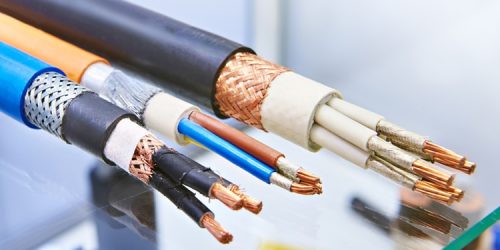
Material selection directly affects how your cable performs. We work with PVC, polyethylene (PE), polypropylene (PP), polyurethane (PU), CPE, and nylon, selecting based on your temperature range, flexibility requirements, chemical exposure, and regulatory constraints. If you’re not sure which material fits your application, that’s exactly the kind of conversation our engineers are here for.
Shielding and EMI Protection
When a cable fails EMI compliance after months of development, the cable spec is usually where the problem started. Inadequate shielding coverage, wrong shield geometry for the frequency range, or missing drain wire configuration can corrupt signal and create compliance problems that are expensive to diagnose late in a program.
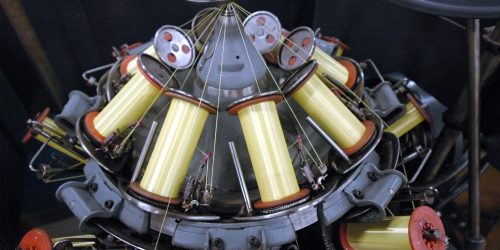
We apply braided, foil, spiral, and combination shielding based on your EMI sensitivity, frequency range, and flexibility requirements. Coverage, impedance, and drain wire configuration are all engineered to spec.

Twisting and Cabling
In high-frequency and tight-bend applications, conductor geometry is not a detail. Lay length, twist direction, and concentric layering all affect electrical performance, flexibility, and long-term durability in ways that catalog cables are not designed to address.
We control lay length, direction, and concentric layering for multi-conductor cable constructions, bringing precision to a specification that most suppliers treat as an afterthought.
Extrusion
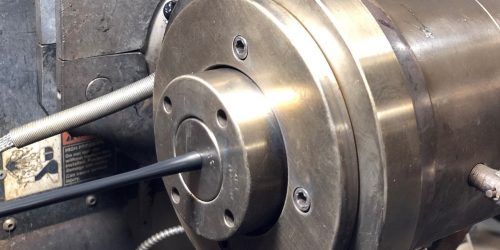
In-house extrusion capabilities allow us to run single-layer, dual-layer, and multi-layer constructions to apply insulation and jacketing materials. This supports tighter dimensional control, faster turnarounds, and the ability to prototype constructions that most suppliers would have to outsource or decline entirely.
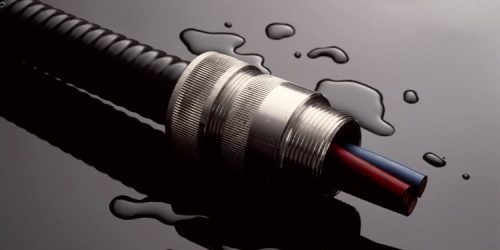
Water Blocking
For cables deployed in submersible, underground, or high-humidity environments, water ingress is a reliability and safety concern, not an edge case. A construction that looks correct in dry testing can fail within weeks of field deployment if the water blocking method is wrong for the exposure level.
We engineer water-blocked cables using dry water-blocking tape, filling compounds, and gel resin methods, matched to the ingress protection level your application requires.
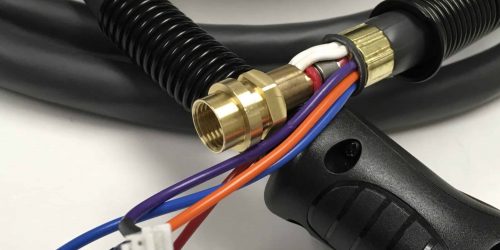
Cable Assembly and Overmolding
Cable and assembly together is where we create the most value for our customers. Managing two vendors, a cable house and a separate assembly shop, means the interface risk lands on you. When tolerance stack-ups or schedule problems occur, both suppliers point at each other.
We handle termination, soldering, connector attachment, overmolding, potting, and full electrical test in-house. One partner, one accountability point, one incoming inspection instead of two.

Engineering and Prototyping
Before any cable goes into production, we engineer it. That means reviewing your application environment, challenging assumptions in the spec, and proposing a construction that will perform reliably over the product’s service life. Our prototyping process is fast, iterative, and collaborative, designed to find problems before production, not after.
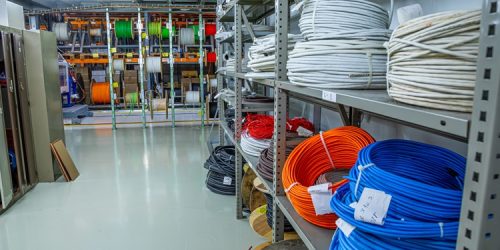
Inventory Flow and Delivery
Once your cable is in production, we treat it like any other line item in your supply chain. Kanban inventory programs, scheduled releases, and pull-based replenishment mean you get the cable you need when you need it, without expedite fees and supply anxiety.
Industries We Engineer Custom Cable For
We work across a wide range of application-specific markets. The common thread is engineering complexity. These are applications where standard cables don’t hold up, and where the cost of failure is high.
Geotechnical and Push Cable
Structural monitoring instruments, inclinometers, and settlement sensors demand cables that hold up under repeated mechanical loading, outdoor exposure, and long signal runs. We engineer for field performance, not lab conditions.
Geotechnical cable →Obstruction Lighting
Towers, wind turbines, and tall structures demand cable that survives UV exposure, temperature cycling, and outdoor weathering while maintaining reliable electrical performance year after year. We are one of the few U.S. manufacturers engineering cable specifically for this application.
Obstruction lighting cable →Underwater and Subsea
Continuously submerged environments punish cable that was not designed for them. We engineer with water-blocked conductors, corrosion-resistant materials, strain relief, and pressure-rated jacketing. We have built cable deployed 850 meters underwater.
Underwater cable →Military and Defense
Defense OEMs need more than a supplier. They need engineering rigor, supply chain traceability, and a U.S.-based manufacturing partner who understands the documentation and quality standards the application demands. We build to your spec and stand behind the work.
Military and defense cable →Robotics and Automation
Continuous flex, torsion, vibration, and chemical exposure destroy standard cable in days. We engineer cables for dynamic load conditions specific to your robotic system, so failures do not halt your line.
Industrial cable →Environmental Monitoring
Sensors and data loggers deployed outdoors need cables that survive wide temperature swings, wet conditions, and long-term exposure without degrading the signal they were installed to carry.
Environmental monitoring cable →Medical (Non-Invasive)
Non-implantable medical devices, imaging systems, and surgical instruments demand precision cable where dimensional consistency, cleanliness standards, and repeatable quality are not optional.
Medical cable →Aerospace
Weight, temperature range, fluid resistance, and mechanical performance requirements in aerospace leave no room for approximation. We build to spec for aerospace OEMs who need an engineering partner, not a catalog supplier.
Aerospace cable →Pipeline and Sewer Inspection
Push rod cables for video inspection and pipe crawlers require a precise combination of column strength, flexibility, and connector durability. We have engineered application-specific solutions for OEMs in this space.
Push rod cable →Moving Your Cable Supply Back to the U.S.?
Offshore sourcing creates lead time uncertainty, communication gaps, and supply chain exposure that is easy to absorb until it isn’t. If reducing overseas risk on your cable and assembly program is on your roadmap, the sooner we have that conversation, the easier the transition is.
We manufacture wire, cable, and assembly under one roof in Spencer, MA. We have helped OEMs move production stateside without disrupting the supply programs that are already working. Tell us where you are and we will tell you what it would take.
Why Engineers Choose Mercury Wire For Custom Cable Manufacturing
There is no shortage of cable manufacturers. What is in short supply are manufacturers who actually engage with your application, collaborate on the design, and then deliver reliably enough that you stop thinking about the cable entirely.
- You talk to the people building your product.
No account reps reading from spec sheets. No quoting desks that forward your drawings to engineers you will never meet. When you call Mercury Wire, you reach the engineers doing the work. That direct access speeds up every part of the process, from first conversation to validated sample to production release.
- Cable and assembly under one roof.
Most cable manufacturers build the cable and hand it off. Most assembly houses receive cable from a vendor they didn’t design with. We do both, in-house, in Spencer, MA. That eliminates the handoff that causes most of the tolerance, schedule, and quality problems our new customers were dealing with before they found us.
- Engineering collaboration, not just quoting.
We review your application environment, not just your bill of materials. We ask about temperature range, bend radius, chemical exposure, expected service life, and what happened the last time a cable failed in your system. That conversation shapes a construction that actually solves the problem, not just one that matches the drawing.
- Repeatable supply, not special orders.
Once your cable design is engineered and validated, it becomes a standard production item in our facility. Same construction, same materials, same quality process, batch after batch. That repeatability is what separates a strategic manufacturing partner from a transactional vendor.
- U.S. manufacturing with real lead-time discipline.
We run lean. We use kanban inventory management and value-stream production teams. That means faster response to demand changes, shorter lead times than overseas suppliers, and no customs delays. How we manage lead time and delivery →
How The Custom Cable And Manufacturing Process Works
Every project starts the same way: a conversation. Not a form submission. Not an automated quote. A direct exchange with an engineer who wants to understand your application before recommending a solution.
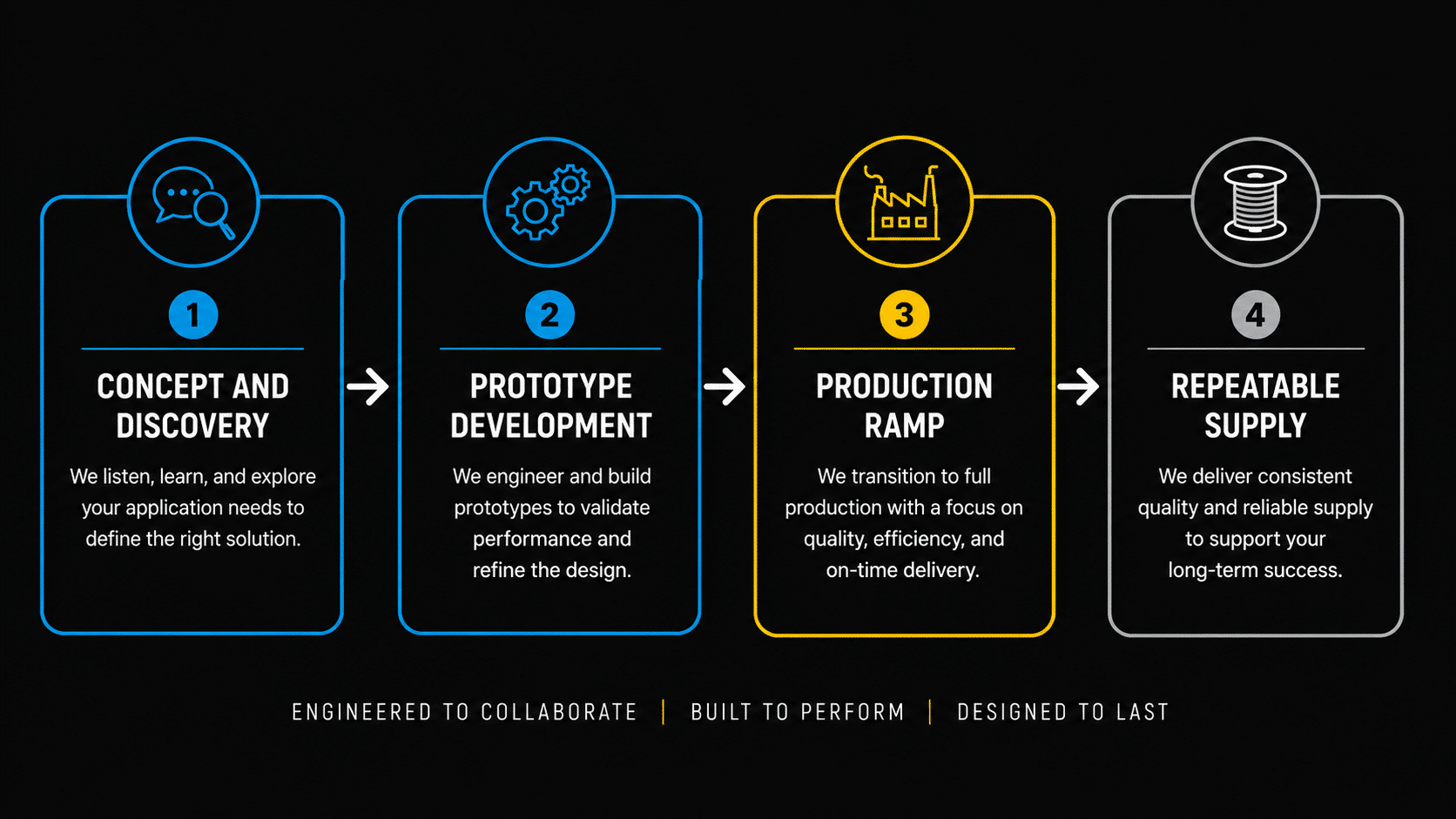
Step 1:
Concept and Discovery.
We start by understanding the real-world environment your cable will live in. Temperature range, chemical exposure, mechanical loading, bend radius, connector requirements, signal type, voltage, and expected service life. This conversation often surfaces requirements the original drawing didn't capture. That's exactly where our value begins.
Step 2:
Prototype Development.
We propose a construction, build samples, and put them in front of you for review. Design iterations happen quickly because every decision is made by the engineers doing the work, with no approvals required from a separate product management layer. We can usually turn a prototype in days, not weeks.
Step 3:
Production Ramp.
Once you sign off on the validated design, it stops being a project and becomes a production standard. Every subsequent run is built from the same process, materials, and quality checkpoints, so the tenth shipment performs exactly like the first.
Step 4:
Reliable, Repeatable Supply.
Kanban inventory and pull-based replenishment keep your production line moving. You set the demand signal; we keep the supply flowing. No special orders, no expedite fees, no supply chain anxiety.
Recurring Quality Problems on the Same Order?
A cable you order repeatedly should not be a recurring source of rejects, field failures, or incoming inspection surprises. If it is, the problem is usually in the original specification, not just the supplier. Switching vendors without fixing the spec means you carry the problem with you.
We engineer application-specific cable from the ground up and build production consistency into every run. If a repeat order is giving you trouble, bring it to us. We will start with the design.
Signs It's Time to Switch Custom Cable Manufacturers
Most customers come to us because something went wrong somewhere else. They are not looking for a cheaper price. They are looking for a partner who actually solves the problem. These are the situations we hear about most often.
Lead times that keep slipping.
Your cable supplier gives you a date. Then another date. Then another. Your production schedule absorbs the hit, and you are the one explaining it upstream. We build with kanban inventory and lean scheduling specifically to eliminate that pattern.
Quality that's inconsistent batch to batch.
First article looks great. Third shipment has a dimensional issue you catch at incoming inspection, or worse, at final assembly. We treat process documentation and quality consistency as a core deliverable, not an afterthought.
No engineering support when you need a design change.
Your application evolved. You need to revisit the cable construction. Your current supplier’s response is a new quote from the quoting desk. Our response is a conversation with the same engineers who designed the original.
A supplier who builds cable but can't do assemblies.
You are managing two vendors: a cable house and an assembly shop whose outputs have to work together perfectly. The risk of that interface falls on you. One partner who does both eliminates the interface entirely.
Overseas supply chain risk you can't afford.
Long ocean transits, customs unpredictability, time zone barriers, and language friction all add up to supply chain exposure that shows up at the worst possible moment. U.S. manufacturing means faster response and fewer variables.
Custom Cable Manufacturing Resources
We publish practical engineering content for design engineers, systems engineers, and sourcing teams working through cable specification challenges. Start with the articles most relevant to your current project.
How to Select the Right Custom Cable for Your Application: A practical framework for working through the specification decisions that most affect field performance.
What Materials Do I Need for My Custom Cable Design?: Conductor, insulation, jacket, and shielding material selection, explained in terms of the tradeoffs that matter for your application.
How to Choose the Right Insulation for Your Cable Needs: Temperature range, chemical resistance, flexibility, and regulatory requirements, covering what each insulation material is actually optimized for.
Withstanding the Elements: Reliable Custom Cable in Harsh Environments: What it takes to engineer a cable that performs in temperature extremes, chemical exposure, or continuous mechanical stress.
Cables Are the Quiet Heroes of Harsh-Environment Monitoring: How application-specific cable design enables reliable data in environmental and subsea monitoring systems.
How Custom Cable Traveled 850 Meters Underwater: A look at the engineering decisions behind a deep-deployment subsea cable that had to perform without a second chance.
Designing Push Rod Cables for Sewer Inspection Systems: The unique mechanical and electrical requirements of push rod cables for video inspection and pipe crawlers.
Top 10 Industries That Rely on Custom Cables: An overview of the industries where application-specific cable engineering isn’t optional. It’s the only path to reliable performance.
The Benefits of Custom Wire and Cable Solutions: Why the total cost of engineered cable, including reliability, lead time, and supply chain stability, typically outperforms catalog alternatives.
3 Examples of Mercury Wire’s Custom Cables in Action: Real-world application stories from our production floor.
The Power of Communication in Custom Cable Partnerships: Why direct engineer access isn’t just a differentiator. It’s what makes the entire process work.
Engineering In Practice
See how our engineering and manufacturing approach has worked for customers across demanding applications:
Engineering Precision in Harsh Environments: How we approached a complex multi-environment cable requirement where standard constructions failed.
Robust Underwater Solution: Designing a cable for continuous submersion where long-term water ingress protection was non-negotiable.
Enhancing Assembly Efficiency Through Upstream Value: How engineering the cable and assembly together reduced our customer’s incoming inspection burden and assembly cycle time.
Durability and Flexibility Is Key: A dynamic flex application where the cable construction had to survive millions of bend cycles without degrading.
Scaling Innovation to Meet Demand: Moving from prototype to production volume while maintaining the exact performance characteristics of the validated design.
Custom Cable Manufacturing: Frequently Asked Questions
Custom cable manufacturing is the process of engineering a wire or cable to a specific application’s electrical, mechanical, and environmental requirements, not adapting a catalog product to fit your design. At Mercury Wire, every construction is designed around the actual conditions the cable will face: temperature range, chemical exposure, mechanical load, connector interface, and expected service life. The result becomes your standard, repeatable supply item, not a special order.
At Mercury Wire, most prototypes are ready in a few days to a couple of weeks, depending on construction complexity and how complete the initial specifications are. Because engineering, cabling, and assembly all happen in-house, we are not waiting on outside suppliers to build samples. The fastest way to get an accurate timeline is to speak with one of our engineers directly. We will tell you exactly what we need to move quickly and what could add time.
There is no hard minimum. We regularly build small prototype runs for design validation and scale to full production volume once a design is established. The right conversation to have is about your volume profile over time, not just the first order. Both small-batch and high-volume programs run through the same engineering and quality process.
We serve application-specific markets where standard cables are not a viable option: geotechnical instrumentation, push rod and pipe inspection, obstruction and emergency lighting, underwater and subsea, military and defense, robotics and industrial automation, environmental monitoring, medical (non-invasive), and aerospace. What these industries share is a need for cables that perform under demanding conditions.
Standard cable is manufactured to general specifications and sold from stock. Engineered cable is designed around the specific requirements of a particular application: its electrical load, operating temperature, mechanical stress, chemical environment, connector interface, and service life. For demanding applications, engineered cable is not a premium option. It is the only option that will actually work.
Yes. We manufacture the cable and build the assembly in-house, under one roof in Spencer, MA. Most cable manufacturers don’t do assemblies, and most assembly houses source cable from vendors they didn’t design with. The integration eliminates the handoff that creates most of the tolerance, schedule, and quality problems in cable assembly programs.
We use lean manufacturing and kanban inventory management to drive predictable, repeatable delivery. Once your cable is a standard production item in our facility, we set up replenishment programs that keep material available to your schedule, not ours. Lead time is not an afterthought at Mercury Wire. It is an engineered outcome. How we design lead time into the process →
Yes. We manufacture in Spencer, MA. All engineering, cabling, and assembly work happens at our facility. We have been manufacturing in the U.S. since 1967. For customers who need supply chain reliability, quick-turn prototyping, and direct engineer access, domestic manufacturing is a meaningful advantage, not just a talking point.
The questions that surface real capability: Do your engineers design the cable or does a quoting desk handle that? Can you build both the cable and the assembly, or do I need a second vendor? What happens when I need a design change after production starts? Can you show me a construction that performed in a similar application environment? At Mercury Wire, these are the questions we ask ourselves before you ask them. We would rather surface the hard design decisions in the first conversation than after a failed first article.