Key Takeaways
- Weather station cable failures follow a predictable pattern that rarely looks like a cable problem. Standard cable performs acceptably for a season or two, then UV exposure degrades the jacket, freeze-thaw cycling stresses the insulation, moisture finds its way in, and readings start drifting. Field crews replace sensors. The cable gets replaced last, after everything else has been ruled out.
- Jacket material selection is the highest-leverage decision in weather station cable specification. Polyethylene provides UV stability and moisture resistance for most outdoor applications. Polyurethane handles abrasion and wide temperature ranges. Standard PVC is not rated for the full temperature range of northern climate installations and becomes brittle at low temperatures in ways that cause cracking during winter handling.
- Shielding configuration needs to match the noise environment of the specific installation site, not a generic outdoor rating. Foil shielding covers most applications. Braided shielding adds durability for installations with movement or vibration. Combination construction handles high-interference environments near power infrastructure. The wrong choice produces measurement errors that look like real weather events in the data record.
- Remote installations that require a day of travel to service need more margin built into the cable specification than installations with easy quarterly access. In July 2019, Mercury Wire cable supplied for an Ohio State University glacial drilling project on Mount Huascarán in Peru sat unattended at 18,000 feet altitude in temperatures approaching -20 degrees Fahrenheit for several weeks through an unexpected delay, and performed without failure when the team returned.
- The cost of cable failure at a remote weather station is almost never limited to the cost of the cable. A single service visit requiring travel and lodging can cost ten to twenty times the original cable cost. Multiple visits over a five-year program can exceed the cost of the entire sensor package. Correct specification at installation is the most reliable way to avoid that math.
Remote weather stations are some of the most unforgiving cable environments in environmental monitoring. UV exposure, wide temperature swings, moisture, ice, rodent activity, and the practical reality that nobody is coming to check on the installation for months at a time create conditions that standard cable wasn’t designed to survive.
When cable fails at a remote weather station the consequences are quiet and cumulative. Readings drift. Data gaps develop. Field crews make expensive trips to remote sites and replace sensors that aren’t actually broken. The real problem is the cable carrying the signal, and by the time it’s identified, the data record may already be compromised.
This post covers what weather station cable actually needs to survive, how design decisions translate into long-term reliability, and what the specification process should look like when the installation has to perform for years without intervention.
Why Weather Station Cable Fails in the Field
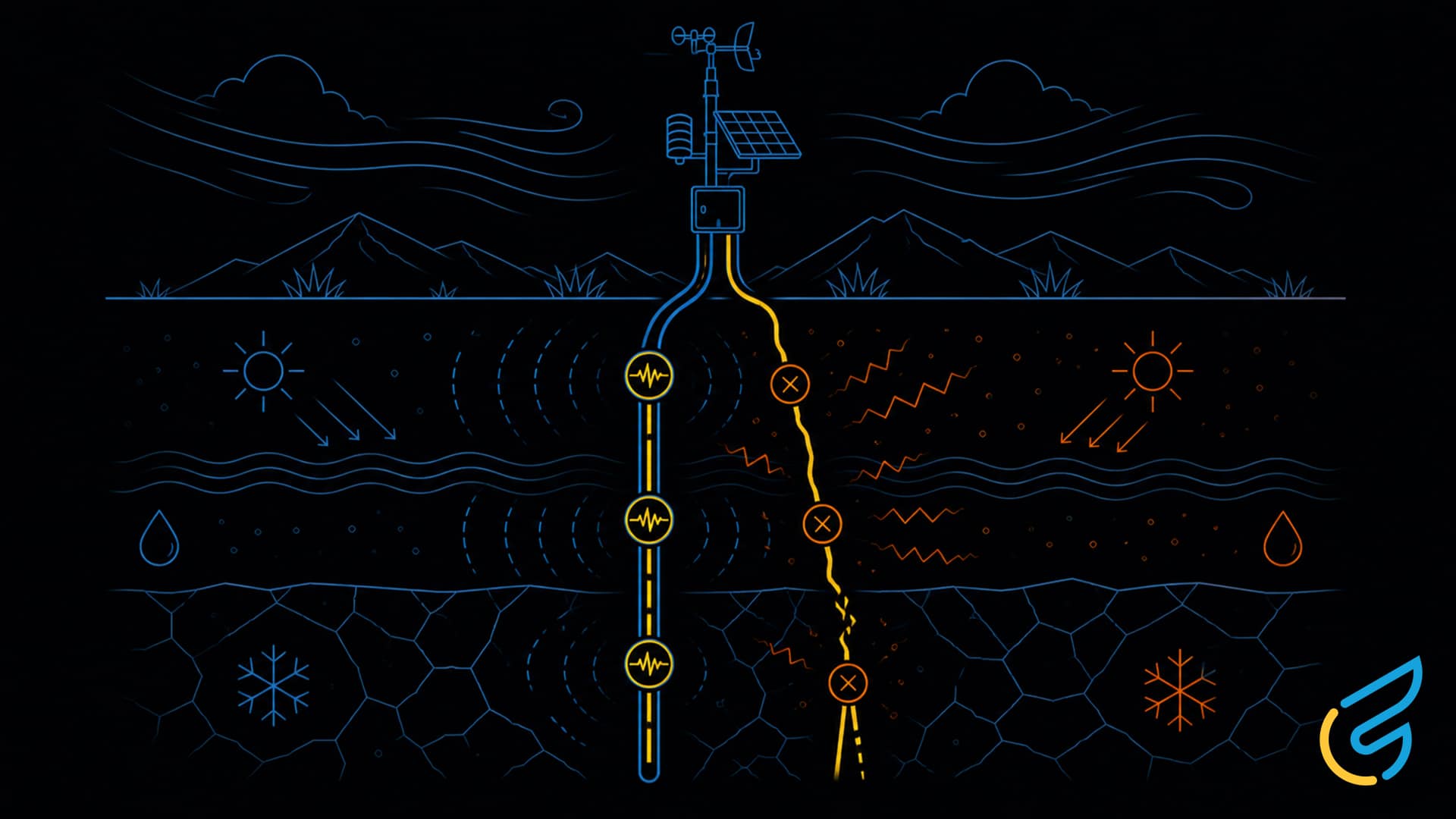
Most weather station cable failures follow a predictable pattern. Standard cable performs acceptably in the first season or two. UV exposure begins degrading the jacket. Repeated freeze-thaw cycling stresses the insulation. Moisture finds its way in through a cracked jacket or an imperfect termination. Rodents investigate the installation and cause damage that wouldn’t have been possible with a more resistant construction.
None of this announces itself as a cable problem. What it looks like from the data logger is noise on sensor lines, intermittent readings, and eventually signal loss. Field crews dispatched to investigate often replace the sensor first because the sensor is the visible component. The cable gets replaced last, after everything else has been ruled out.
By that point a remote installation may have produced months of unreliable data and required multiple maintenance visits, each one carrying travel and labor costs that dwarf the cost of the cable itself.
The right specification prevents this sequence entirely. But it requires treating cable as a system design decision rather than a procurement item selected after everything else is already specified.
What Remote Weather Station Cable Actually Has to Survive
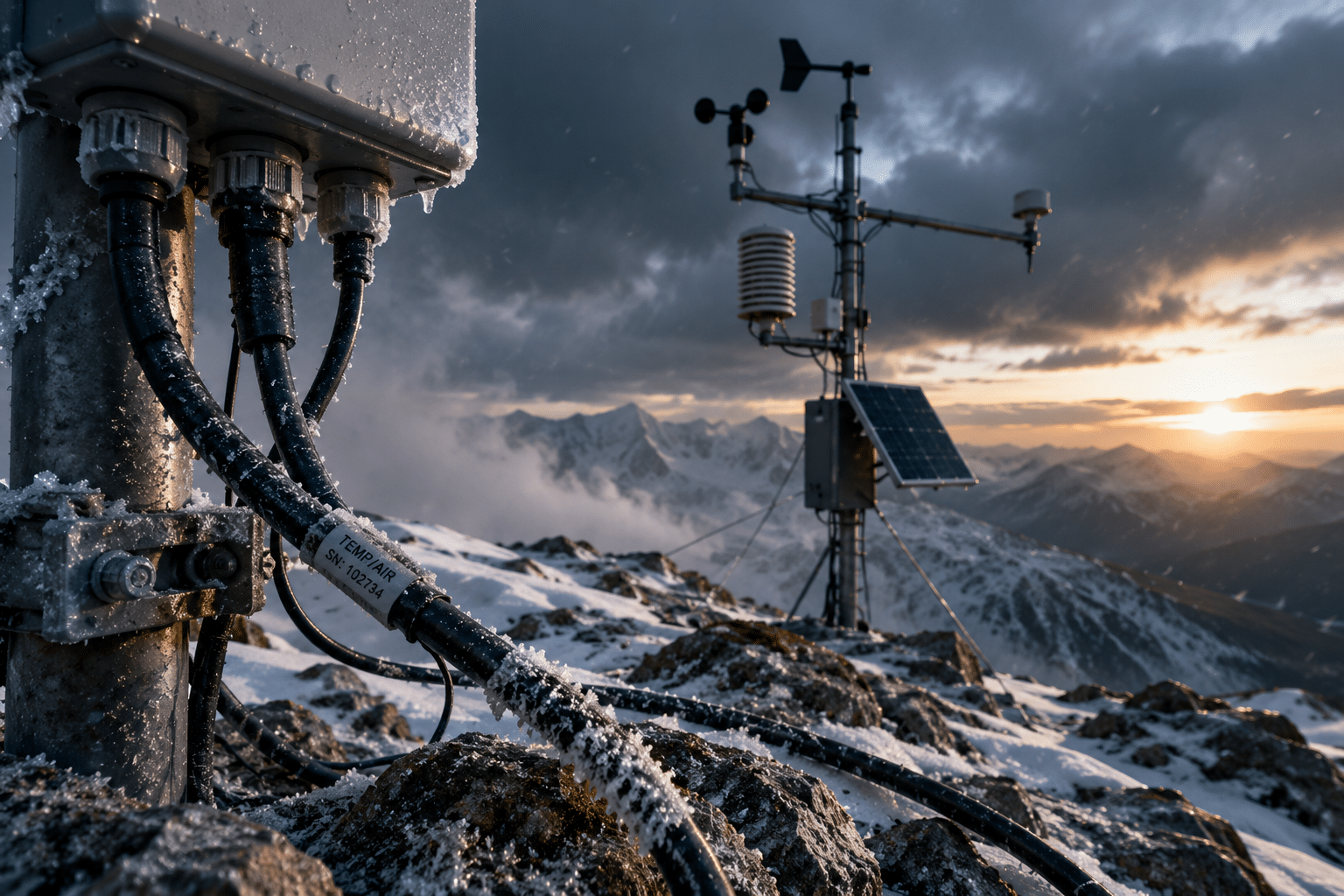
Weather station installations vary significantly by location, but the environmental demands on cable cluster around a consistent set of challenges.
-
UV and Temperature Extremes
Outdoor cable that isn’t rated for UV exposure has a limited service life that compresses dramatically in high-sun environments like open fields, mountaintops, coastal zones, and desert installations. Jacket materials degrade, crack, and become brittle. Once the jacket is compromised, everything else follows.
Temperature range matters independently of UV. Cable materials need to remain flexible and electrically stable across the full operating range of the installation. In northern climates that can mean maintaining flexibility at -40°F during winter installation and remaining stable at 180°F during summer operation. Standard PVC jackets are not rated for this range and become brittle at low temperatures in ways that cause cracking during handling and installation.
-
Moisture and Ice
Rain, snow, condensation, and ice create constant moisture exposure for outdoor cable runs. Sealed constructions and appropriate jacket materials extend cable life substantially in these conditions. Freeze-thaw cycling is a particular stress point at terminations and connection points, where differential expansion and contraction between materials creates gaps that moisture enters over time.
-
Rodent and Mechanical Damage
Outdoor installations are frequent targets for rodent chewing. This is not a minor risk in agricultural, forested, or remote field environments. No construction is completely rodent-proof, so we work from field reports of the activity at the site to draw up a plan. Rodent-resistant jacket materials and armored construction reduce the risk in high-risk installations. Mechanical abrasion from wind movement, contact with mounting hardware, and installation tension are secondary damage sources that accumulate over multi-year service lives.
-
Low-Noise Signal Transmission
Weather sensors produce low-voltage analog signals that are vulnerable to electrical interference from power lines, motors, radio transmitters, and lightning activity. At remote sites where power infrastructure is nearby or lightning activity is frequent, shielding design becomes one of the most consequential specification decisions. Noise that corrupts a fraction of a signal range produces measurement errors that look like real weather events in the data record.
-
Long Cable Runs to Remote Data Loggers
Weather stations often route cable over significant distances from sensor arrays to data loggers or telemetry equipment. Run length affects conductor sizing requirements. Undersized conductors introduce resistance that causes voltage drop and signal degradation over long runs. This is a calculation that needs to be done for the actual installation geometry, not estimated from a generic spec sheet.
Cable Design Decisions That Determine Long-Term Performance
Understanding what the cable has to survive is the starting point. Translating those requirements into a specific construction is where the design work happens.
-
01
Jacket Material Selection for Outdoor Exposure
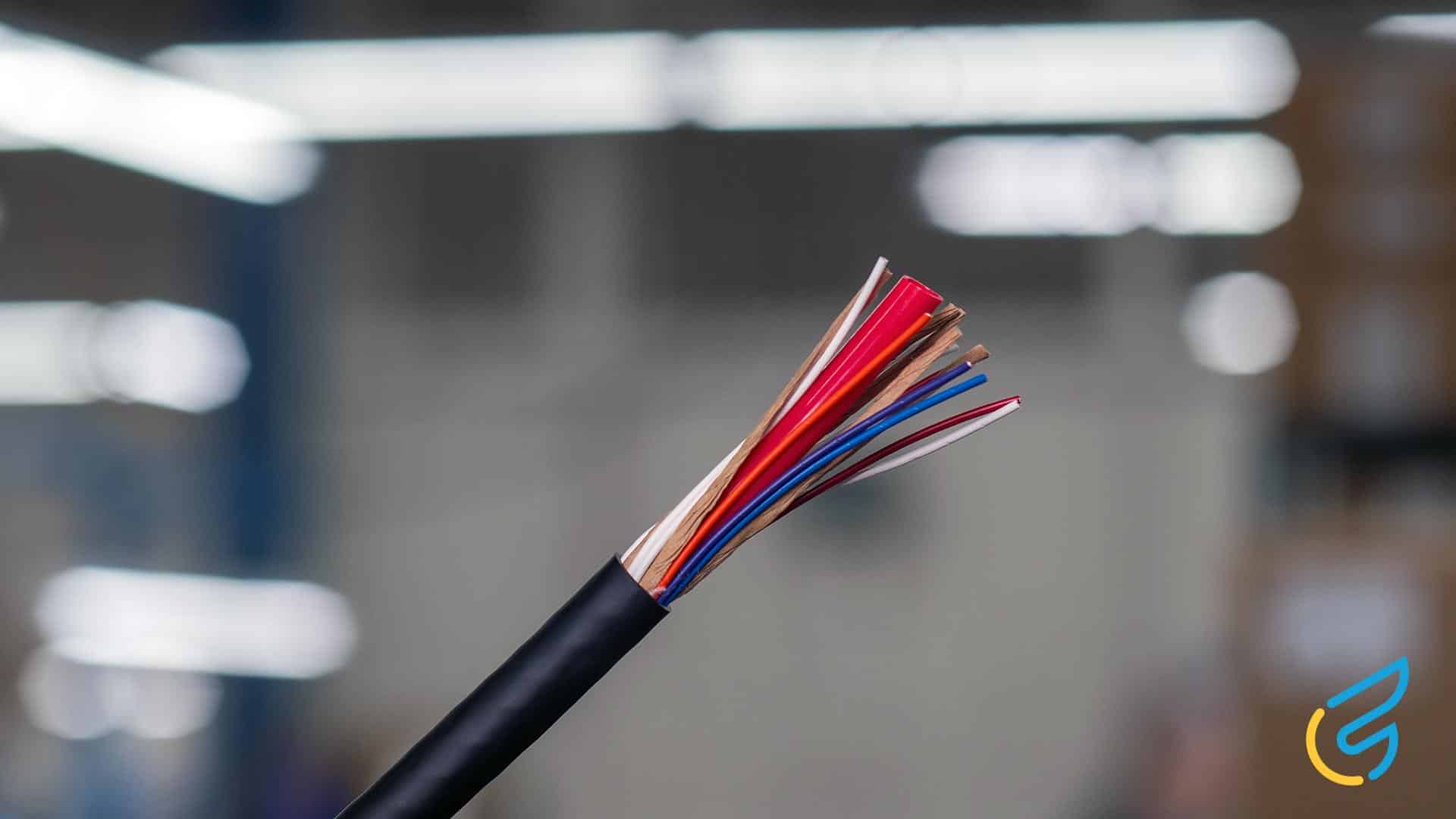
Jacket material is the first line of defense against every environmental exposure the cable faces. Polyethylene provides excellent moisture resistance and UV stability for outdoor use. Polyurethane offers strong abrasion resistance and flexibility across a wide temperature range, making it a good fit for installations with repeated handling or mechanical stress. Low-temperature compounds maintain flexibility in freezing climates where standard materials become brittle.
Matching jacket type to the specific exposure profile of the installation site is one of the highest-leverage decisions in weather station cable specification. A jacket that performs well in a temperate coastal installation may be wrong for a high-altitude or arctic environment.
-
02
Shielding for Accurate Low-Level Signals
Foil shielding provides lightweight full-coverage protection for most weather station applications. Braided shielding adds mechanical durability and higher flex life for installations with movement or vibration. Combination foil and braid construction delivers maximum noise rejection in high-interference environments near power infrastructure or industrial sites. Drain wires provide reliable grounding continuity along the cable run.
The right shielding configuration depends on the noise environment of the specific installation site, not a generic outdoor rating.
-
03
Conductor Configuration for Run Length and Signal Type
Stranded conductors handle the repeated bending and movement of installation and seasonal thermal cycling better than solid conductors. Solid conductors offer more stable signal transmission for low-level analog measurements where dimensional consistency matters. Conductor sizing needs to be calculated for the actual run length from sensor to data logger, accounting for the full circuit including any horizontal runs to telemetry equipment.
-
04
Pre-Terminated Assemblies for Remote Installation
Weather stations are often installed in locations where field wiring conditions are difficult. Wind, cold, limited workspace, and time constraints create conditions where field termination errors are easy to make and hard to diagnose once the installation is complete. Pre-terminated cable assemblies with connectors, strain relief, and sealing already built reduce installation complexity and improve connection reliability across the network.
For OEM weather station manufacturers, pre-terminated assemblies also reduce installation time at customer sites and eliminate a category of warranty claims related to field wiring quality.
When the Environment Is as Extreme as It Gets
The conditions the equipment had to survive included temperatures approaching -20°F, extreme altitude, and an unexpected multi-week delay when the team reached an accord with local residents who had concerns about the project. The equipment, including Mercury Wire cable supplied for the drilling rig operated by Cryosphere, sat unattended at altitude through that delay and performed without failure when the team returned to complete the work.
That application is not a weather station in the traditional sense. But it represents the same fundamental requirement: cable that performs in an extreme, remote, unattended environment without the option of a quick service visit when something goes wrong. The specification decisions that made the Mt. Huascarán cable work are the same decisions that determine whether a remote weather station delivers reliable data for five years or starts producing questionable readings after two.
Planning Weather Station Cable for the Life of the Installation
Weather station installations are typically designed for multi-year service lives. The cable specification decision made at installation follows the system for its entire operating life. A cable that costs less but requires a maintenance visit every eighteen months costs more over a five-year program than a cable that is correctly specified from the start.
This is a calculation that is easy to underestimate because the cable cost is visible at procurement and the maintenance costs are distributed over the life of the installation. A remote site service visit that requires travel, lodging, and a day of labor can cost ten to twenty times the original cable cost. Multiple visits over a five-year period can exceed the cost of the entire sensor package.
We’ve seen this dynamic play out directly in work with a manufacturer of portable water analysis meters deployed across natural waterways, oceans, groundwater sources, and drinking water networks. Their cable assemblies were experiencing higher than anticipated field failures. Rather than swapping materials and hoping for improvement, we designed custom accelerated life cycle testing equipment to simulate field conditions in-house, analyzed failed cables against end-user feedback to identify the root cause, and iterated through prototypes until the construction met the performance specification under simulated conditions before it went to field. The result was a significantly reduced field failure rate and a measurable reduction in warranty costs. The same engineering process applies to any cable that needs to perform in an unattended remote environment over a multi-year service life.
Designing Weather Station Cable Around Your Application
No two weather station installations have identical requirements. Effective cable specification starts from the actual conditions of the site, not from a generic outdoor rating.
Key Specification Inputs
Installation Location and Exposure Profile
Mountaintop, coastal, agricultural, desert, and arctic installations each present different combinations of UV intensity, temperature range, moisture exposure, and mechanical risk. The exposure profile of the specific site drives material selection.
Temperature Range and Freeze-Thaw Frequency
The full operating temperature range including installation temperature determines which jacket and insulation materials are appropriate. Frequent freeze-thaw cycling adds stress at terminations and connection points that needs to be accounted for in the design.
Signal Type and Run Length
Analog and digital sensors have different conductor and shielding requirements. Run length from sensor to data logger drives conductor sizing calculations for voltage drop and signal integrity.
Rodent and Mechanical Risk
No construction is completely rodent-proof. For sites with known rodent activity in agricultural, forested, or remote field environments, we work from field reports to draw up a plan using rodent-resistant jacket materials or armored construction that reduces the risk. Installations with wind movement or contact with hardware also need construction that handles mechanical abrasion over multi-year service lives.
Expected Service Life and Maintenance Access
A five-year installation at a site that requires a day of travel to reach requires different specification decisions than an installation with easy quarterly access. Service life and maintenance access together determine how much margin to build into the cable specification.
Working with a cable partner who understands the specific demands of remote environmental monitoring installations ensures the final specification addresses the actual conditions of the site, not just the standard outdoor use case.