Every structure above FAA height thresholds needs obstruction lighting. That requirement is clear. What is less clear and where projects consistently run into trouble is the cable specification behind it.
FAA Advisory Circular 70/7460-1 tells you what the lighting system has to do: flash rate, intensity, color, and positioning requirements for structures that pose a hazard to air navigation. What it does not tell you is what cable to run. That gap between the regulatory requirement and the cable specification is the engineer’s responsibility and it is where standard outdoor cable tends to fall short.
This post covers the five environmental factors that determine whether your obstruction lighting cable performs reliably across the structure’s full outdoor service life or fails quietly in year six, after the tower is no longer easy to access.
What the FAA Actually Requires and What It Doesn’t
FAA Advisory Circular 70/7460-1L (Obstruction Marking and Lighting) is the governing document for obstruction lighting systems in the United States. It establishes requirements for lighting type, color, intensity, flash characteristics, and positioning based on structure height and location relative to airports and air navigation paths.
The AC specifies system performance. It does not specify the cable that powers and connects that system. From the FAA’s perspective, if the light is on and meets the required characteristics, the system is compliant. How the cable gets it there is the engineer’s design decision.
This matters because it places the cable specification entirely outside the regulatory framework and outside the review process of fixture manufacturers who supply the lights. The lights are tested and certified. The cable is not. That leaves a design gap that a surprising number of projects fill with whatever outdoor cable is convenient, rather than whatever outdoor cable is actually correct for the application.
The FAA tells you what the light has to do. The cable specification is your responsibility and it has to survive the same outdoor environment as the structure itself, often for 20 years or more without access for repair or replacement.
Five Failure Modes That Standard Outdoor Cable Won’t Survive
Standard outdoor cable is designed to meet electrical requirements. Obstruction lighting cable has to meet environmental requirements and those are considerably more demanding. Here are the five most common failure modes we see in obstruction lighting cable that was underspecified for the installation environment.

Failure Mode 1: UV Degradation
Standard PVC jacket compounds begin to chalk, crack, and lose flexibility after five to seven years of direct outdoor UV exposure. On a wind turbine, a broadcast tower, or an industrial smokestack, the cable is exposed to full UV load for the life of the structure which is typically measured in decades, not years.
Obstruction lighting cable requires a UV-stabilized jacket compound, polyurethane (PUR) or a UV-rated thermoplastic elastomer (TPE), engineered to maintain flexibility and jacket integrity across the structure’s full outdoor service life.* The correct compound is selected based on the UV index at the installation site and the expected temperature range, not just the voltage rating.
Failure Mode 2: Thermal Cycling
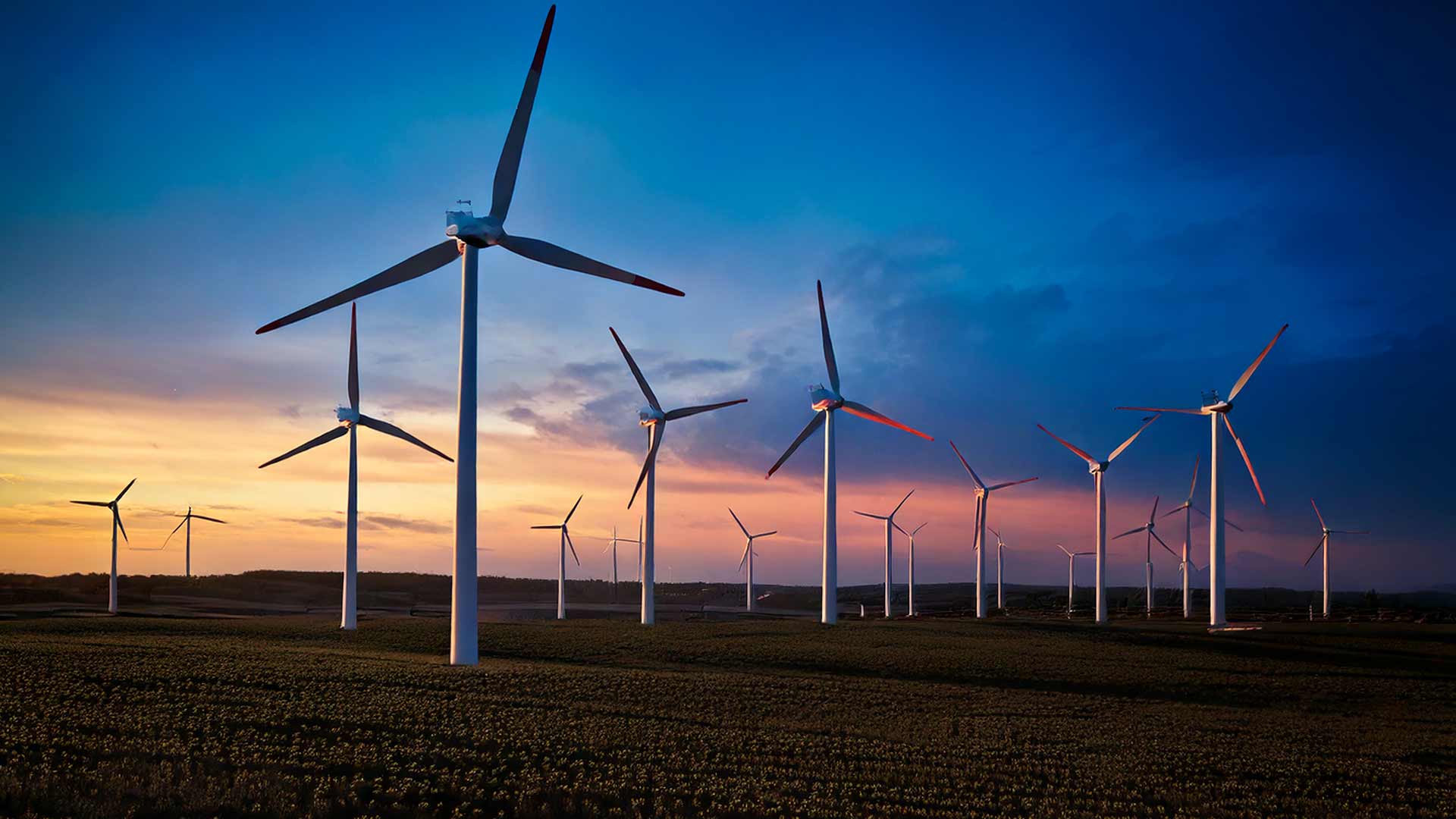
A cable run from the base to the tip light on a wind turbine can experience ambient temperatures from -40°C in a northern winter to over +80°C under direct summer sun on a sun-facing surface. That is not an unusual range. It is the expected operating range for a structure designed to run unattended for decades.
Standard outdoor cable may meet the low-end temperature rating on the data sheet, but data sheet ratings and real-world performance across repeated thermal cycles are different things. Jacket compounds that are not formulated for wide-range thermal cycling become brittle at low temperatures and soft at high ones. Repeated cycling accelerates cracking and failure at termination points and anywhere the cable bends around a support.
The correct specification matches jacket chemistry, insulation compound, and conductor construction to the full thermal range of the installation, not the average temperature.
Failure Mode 3: Moisture Ingress
Water enters cable systems through three primary pathways: jacket breaches from UV degradation or mechanical damage, connector interfaces that were not properly sealed, and cut ends that were not properly terminated. In outdoor tower installations, all three are live risks across a multi-decade service life.
For exposed outdoor installations, particularly marine structures, offshore platforms, bridge lighting, and tower installations in high-rainfall environments, water blocking is the correct specification, not an optional upgrade. Water-blocked cable uses specialized tapes, gels, or flooding compounds between the jacket and the conductors to stop moisture migration along the cable length even if the jacket is breached at one point.
Standard outdoor cable with no water blocking protection can carry moisture from a single jacket breach across hundreds of feet of cable run before it reaches a termination point. Water-blocked construction stops moisture migration at the breach point, and it is the correct specification for any exposed outdoor tower installation, not an optional upgrade.
Failure Mode 4: EMI in RF-Dense Environments
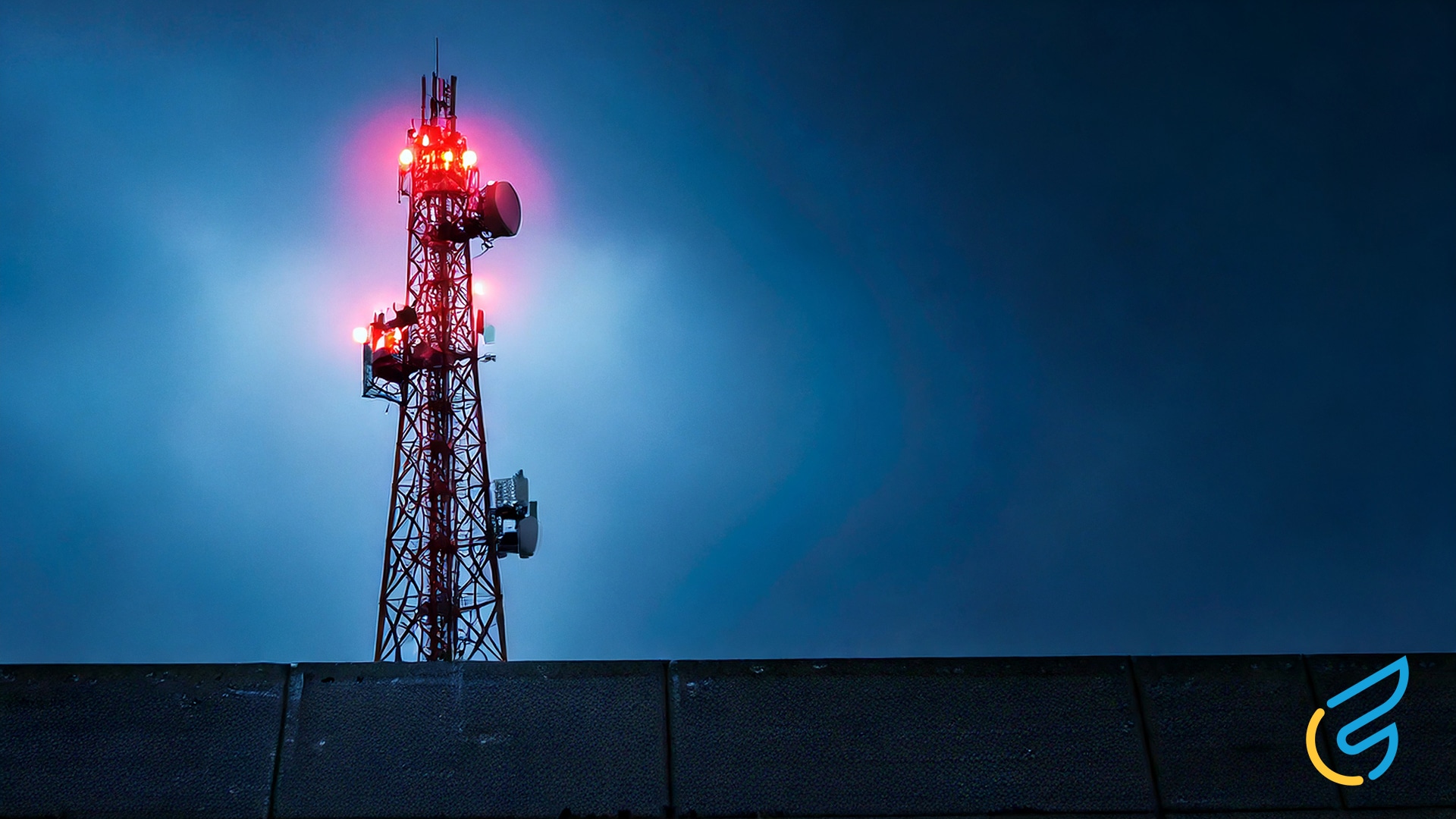
Broadcast towers co-located with AM and FM transmitters are among the strongest electromagnetic environments in the cable industry. The RF fields generated by co-located transmitters can induce noise in unshielded signal cables running alongside power feeds and the obstruction lighting control system was never designed to filter that interference out. Learn more about how we engineer site-specific shielding for RF-dense tower environments and why a generic shielded outdoor spec is not sufficient for broadcast tower applications.
The result is unpredictable system behavior: false fault signals, flickering, or control system errors that look like electrical failures but are actually electromagnetic interference problems. They are difficult to diagnose from the ground and expensive to address once the tower is in service.
Obstruction lighting cable for broadcast tower environments requires proper shielding, foil, braid, or foil-and-braid combination, selected for the frequency range and field strength of the specific RF environment at the installation site. This is not a generic shielding spec. It is an engineered solution for a specific electromagnetic condition.
Failure Mode 5: Mechanical Fatigue at Termination Points
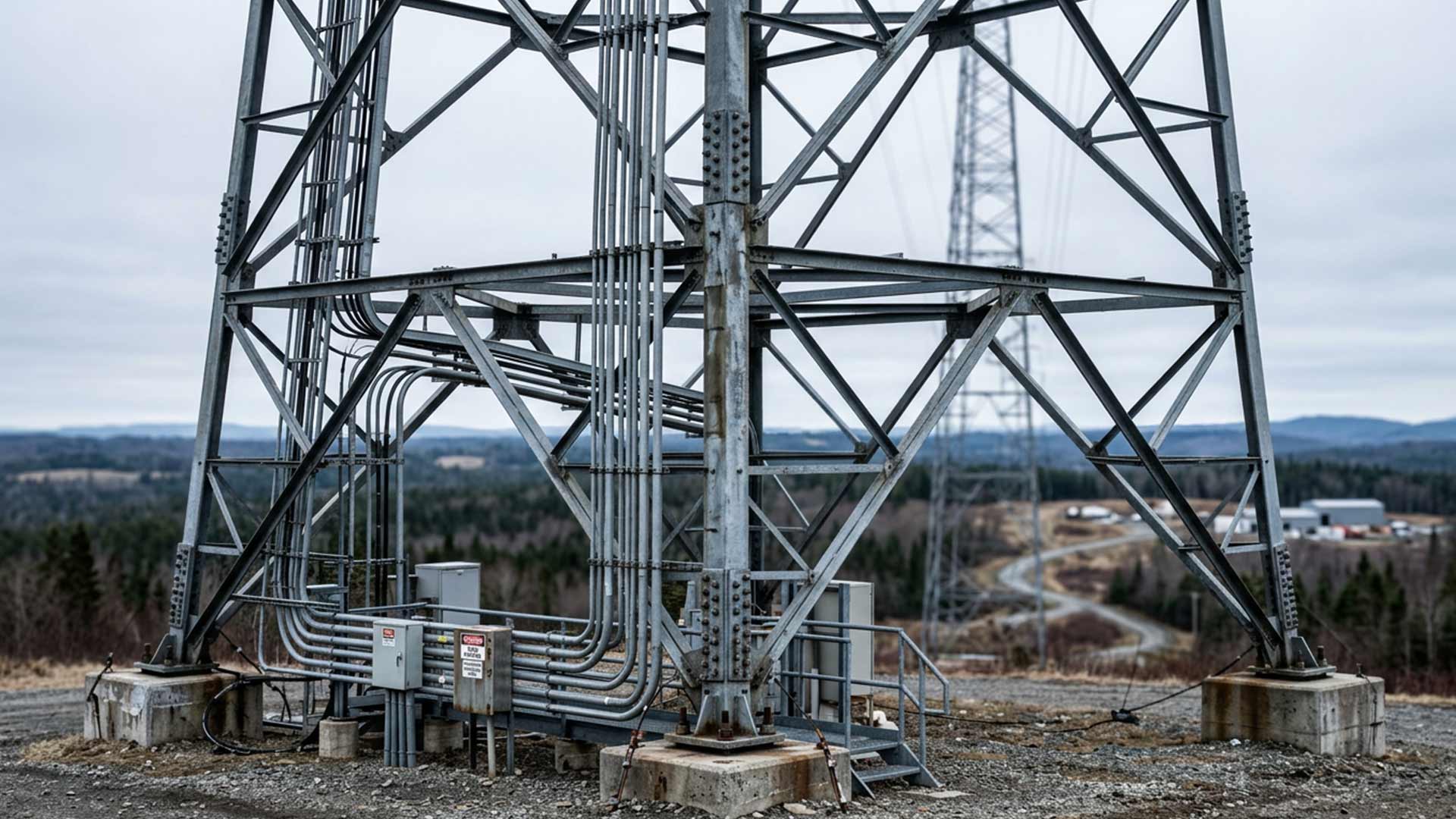
Towers flex. In wind loading, a tall structure moves, sometimes significantly. Cables attached to that structure experience repeated bending cycles at every support point and especially at termination points where the cable transitions from flexible run to fixed connection.
Standard outdoor cable conductors are not specified for flex life. They are specified for a fixed installation where the conductor stays in one position. In a tower environment with wind-induced movement, conductors that are too stiff crack at support points; conductors that are too flexible may not have the cross-sectional area to handle the system’s current draw without voltage drop over the full run length.
The correct specification balances conductor flexibility with electrical requirements and routes the cable in a way that minimizes bending stress at termination points. This is a design decision, not a product selection.
How to Build Your Obstruction Lighting Cable Specification
Before specifying cable for an obstruction lighting system, an engineer needs to document the actual installation conditions, not the nominal conditions or the best-case scenario. Here is the information that drives the correct cable specification:
- Tower type and height: wind turbine, broadcast tower, cell tower, marine structure, or industrial structure. Note that broadcast tower and wind turbine installations may require aviation warning light cable specifications aligned to FAA Advisory Circular 70/7460-1.
- Cable run length: from power source to light, including any intermediate junction points
- Ambient temperature range: minimum and maximum expected at the installation site, including solar loading on sun-facing surfaces
- UV and weather exposure: fully exposed, partially conduit-routed, or protected
- Moisture environment: is water blocking required? Marine and offshore installations: yes. Exposed outdoor tower installations: strongly recommended
- RF environment: is this a broadcast tower or a site with co-located transmitters? If yes, shielding specification is required
- System voltage and current draw: drives conductor gauge selection and voltage drop calculation across the full run length
- Service life target: varies by structure type and installation environment. Confirm with your engineering team.*
- Assembly requirements: terminated runs, connectorized connections, or weatherproof overmolded assemblies at connection points
Obstruction Lighting Cable vs. Standard Outdoor Cable: What’s Actually Different
Engineers specifying obstruction lighting cable for the first time often ask whether standard outdoor cable, rated for outdoor use and within the system’s voltage and current requirements, is sufficient.
The answer is: electrically, often yes. Environmentally, usually not.
Standard outdoor cable is designed to meet electrical requirements in a general outdoor installation. It is not designed for the combination of UV exposure, wide thermal cycling range, mechanical movement, and in certain applications EMI or moisture ingress that a tower-mounted obstruction lighting system experiences across a multi-decade service life.
The difference shows up in year eight, not year one. In year one, both cables work. In year eight, the cable engineered for the environment still works. The cable that was electrically adequate but environmentally underspecified has cracked jacket sections, compromised terminations, or intermittent faults that are time-consuming and expensive to trace.
Standard outdoor cable meets the electrical requirements. Obstruction lighting cable meets the environmental requirements. For systems that will not be easily accessed for repair, and most tower installations won’t be, the distinction matters across the full service life.
Why the Cable Specification Conversation Starts Before the Design Is Finalized
The most effective obstruction lighting cable specifications are developed during the design phase, before conductor routing is finalized, before termination points are fixed, and before the tower installation schedule is set.
At that stage, the cable specification can influence routing decisions that reduce bending stress, termination choices that improve weatherproofing, and conductor sizing that balances voltage drop against cable weight and cost. Once the design is finalized and installation begins, those options close. For a full overview of obstruction lighting cable construction, application environments, and specification capabilities, see our obstruction lighting cable overview.
We work directly with OEM designers, system integrators, and engineering teams during the specification phase, before a design is locked. We start with the application environment, the run length, the system requirements, and the service life target, and propose a cable construction built around those inputs. Once that specification is established, it becomes your standard repeatable supply item: consistent quality, predictable delivery, and a supply partner who understands why it was built the way it was. If your system requires finished assemblies alongside the cable, see our obstruction lighting cable assembly capabilities.